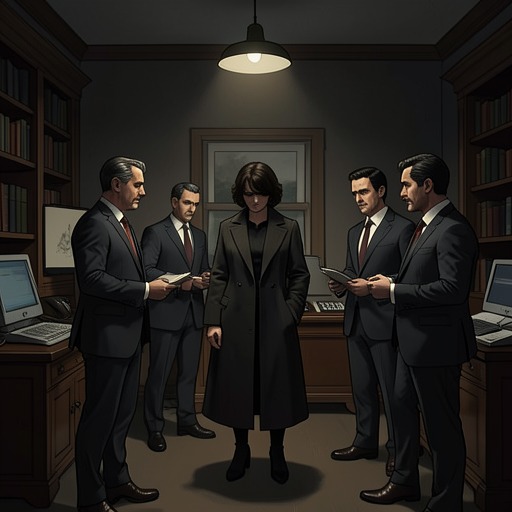
The dead are those who are left behind
Night TrainThe dead are those who are left behind is a recurring expression that reverses the familiar language of abandonment. In a reflection on suicide and reproach, it distinguishes the people who continue living from the dead, who can no longer continue or answer for themselves. The reversal complicates the urge to treat a death as a final statement aimed at those who survive.
The rule the expression resists
The narrator recalls a rough rule in suicide studies: the more violent the means, the more loudly the death was interpreted as a reproach to the living; a death that left the body apparently undisturbed was taken as a quieter reproach. The expression emerges as the narrator rejects that scheme rather than accepting method as a reliable measure of intention. The passage questions whether a person’s chosen means can establish that they were thinking of anyone else.
Reversal and its personal cost
The narrator contrasts the idea that the living have been left behind with the claim that the dead are the ones left behind: the living go on, while the dead stop. This does not make the death harmless to survivors. The narrator acknowledges that Jennifer Rockwell hurt the living and that the circumstances of her death provoked anger, while resisting the dismissive stereotype by which others might remember her. The expression holds these responses together—grief and resentment, continuation and loss—without turning them into a settled explanation of her intentions.
Significance
The phrase unsettles the assumption that a death’s meaning can be confidently decoded from its circumstances. It also changes the direction of the reader’s attention: instead of treating survivors as the only people abandoned, it emphasizes the finality imposed on the dead. In the passage, that reversal makes the narrator’s refusal to reduce Jennifer Rockwell to a reproach, a clue, or a stereotype part of the act of remembering her.